How Much Should I Spend on Google Ads or Paid Advertising?
Not sure how much to budget for Google Ads or paid advertising? Learn how to determine the right advertising budget for your business and your goals.
One of the first questions business owners ask before launching a marketing campaign is, “How much should I spend?” It’s an important question—but it’s also the wrong place to start.
The better question is: How much business are you trying to generate?
Your advertising budget shouldn’t be determined by an arbitrary number or what your competitors are spending. It should be based on your goals, your industry, your market, and the value of a new customer to your business.
There’s No Universal Budget
You’ve probably seen articles recommending that small businesses spend anywhere from a few hundred dollars to several thousand dollars per month on advertising. While those recommendations aren’t necessarily wrong, they’re too broad to be useful. A local coffee shop has very different advertising needs than a personal injury law firm. Likewise, an HVAC contractor in a small Texas town isn’t competing against the same number of businesses as one serving the Dallas-Fort Worth metroplex. Every business—and every market—is different.
Think About Customer Value
Instead of focusing on what you’re spending, think about what you’re earning.
Ask yourself:
- How much is a new customer worth?
- How often do customers return?
- What’s the lifetime value of a client?
- How many new customers would you like to generate each month?
For example, if a single new customer generates several thousand dollars in revenue, investing a few hundred dollars to acquire that customer may be an excellent business decision. Advertising should be viewed as an investment, not simply an expense.
Budget for Data, Not Just Leads
One mistake many businesses make is setting a budget that’s too small. A limited budget may not generate enough clicks, impressions, or conversions to provide meaningful data. Without data, it’s difficult to improve your campaigns or understand what’s working. An effective advertising budget gives your campaigns enough room to collect information, identify trends, and optimize performance over time.
Google Ads vs. Social Media Advertising
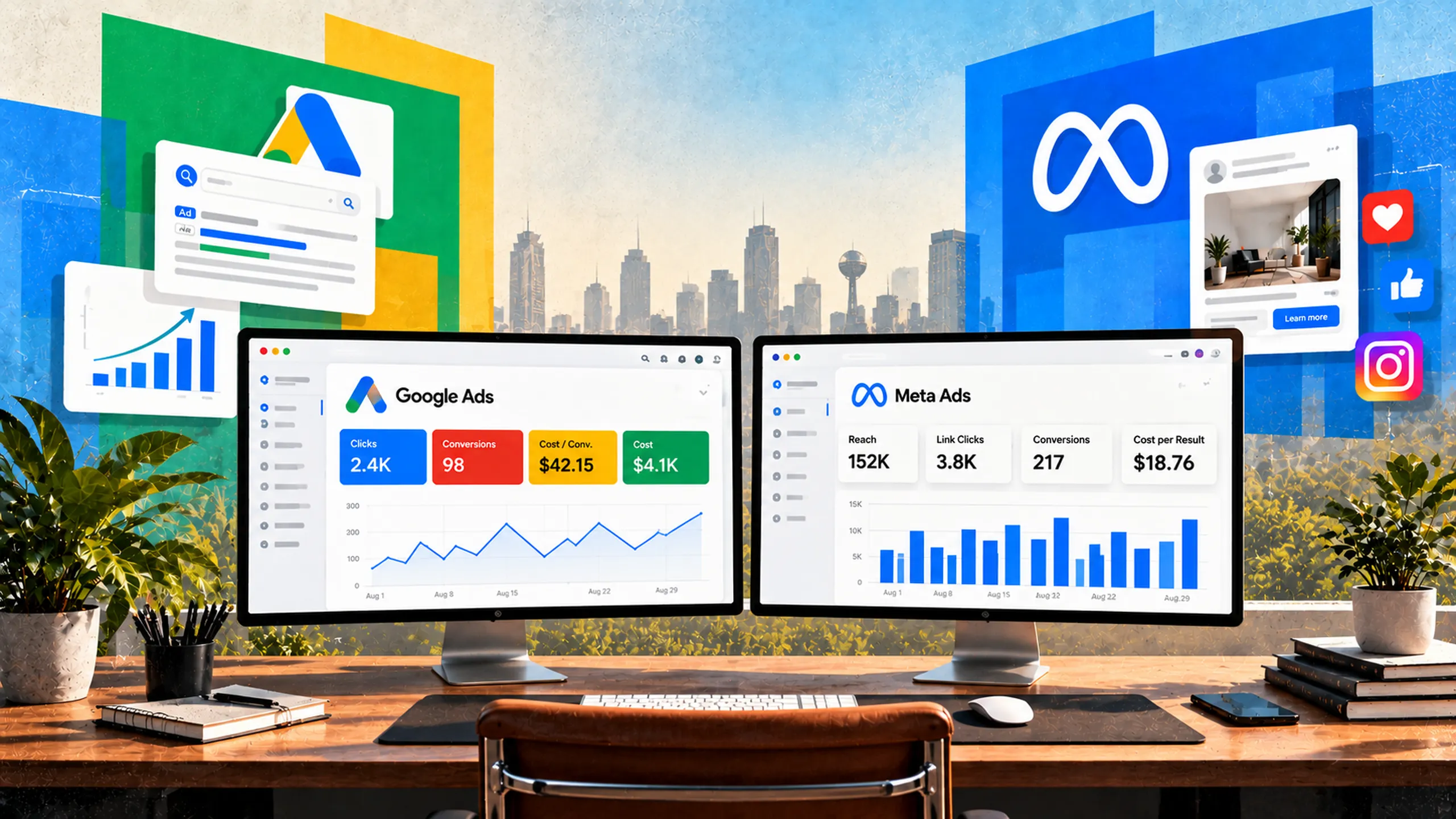
Different advertising platforms require different expectations. Google Ads captures people who are actively searching for your products or services. These campaigns often generate higher-quality leads because the customer already has purchase intent. Facebook and Instagram work differently. They’re excellent for building awareness, promoting special offers, introducing new products, and staying visible with potential customers before they’re ready to buy. Many businesses achieve the best results by using both platforms together rather than relying exclusively on one.
Your Industry Matters
Some industries are simply more competitive than others. Businesses such as attorneys, healthcare providers, roofers, HVAC contractors, and plumbers often pay significantly more per click than businesses operating in less competitive markets. Higher advertising costs don’t necessarily mean advertising is less effective—they simply mean your budget should reflect the level of competition.
Start With a Realistic Budget
Rather than trying to dominate your market overnight, it’s often better to start with a realistic budget, monitor performance, and expand your investment as campaigns become more efficient. Advertising is an ongoing process of testing, learning, and improving. A campaign that’s properly optimized over several months will often outperform one that spends heavily without a clear strategy.
Don’t Forget Management Costs
Your advertising budget and your campaign management are two separate investments. Your advertising budget goes directly to platforms like Google or Meta.
Campaign management covers the work involved in:
- Keyword research
- Audience targeting
- Campaign setup
- Ad creation
- Conversion tracking
- Landing page optimization
- Ongoing optimization
- Performance reporting
Both are important to achieving long-term success.
Bigger Isn’t Always Better
Spending more money doesn’t automatically produce better results. Poorly managed campaigns can waste thousands of dollars every month. Well-managed campaigns focus on attracting qualified customers, improving conversion rates, and generating a positive return on investment—not simply increasing clicks or impressions.
Build Your Budget Around Your Goals
There’s no magic advertising budget that works for every business. The right investment depends on your market, your competition, your services, and your growth objectives. My approach is to understand your business first, then recommend a budget that gives your campaigns the best opportunity to succeed—not simply the biggest budget possible.
If you’re considering Google Ads or paid social advertising and aren’t sure where to begin, I’d be happy to help you build a strategy that’s realistic, measurable, and designed around your business goals.
[contact]