Should I Hire a Freelancer or a Web Design Agency?
Should you hire a freelancer or web design agency? Compare costs, experience, communication, capabilities, and ongoing support before choosing.
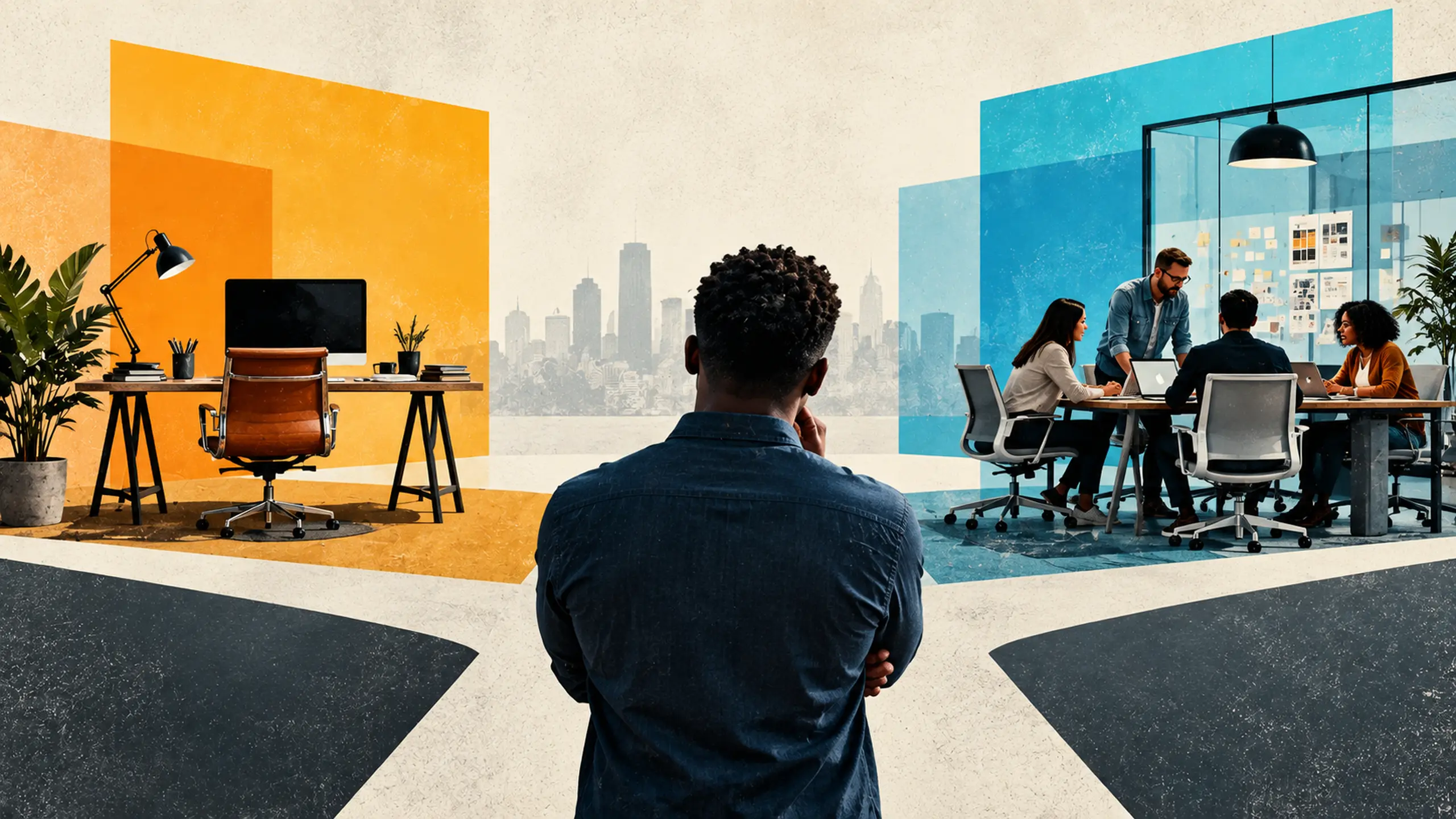
If you’re planning a new website or redesigning an existing one, one of the first decisions you’ll have to make is who should actually build it.
Do you hire an independent freelancer? Do you work with a web design agency? Do you need a larger digital marketing agency that can handle everything under one roof? There isn’t a universal answer.
I’ve worked in web design and digital marketing for more than 15 years, and I’ve seen excellent work produced by freelancers, small studios, and large agencies. I’ve also seen businesses spend a lot of money on websites that weren’t particularly well suited to what they actually needed.
Instead of choosing based on whether someone calls themselves a freelancer or an agency, I recommend looking at who will actually be doing the work, what they’re capable of doing, and what your relationship with them will look like after the website launches.
What’s the Difference Between a Freelancer and a Web Design Agency?
Traditionally, a freelancer is an individual who works directly with clients, while an agency employs a team of designers, developers, marketers, project managers, and other specialists.
In practice, the distinction isn’t always that simple. Some independent web developers manage dozens of websites and provide services that would traditionally be associated with an agency. Meanwhile, some small agencies may consist of only a few people and outsource much of their work.
That’s why I wouldn’t make your decision based on the label. The more important question is: What resources does your project actually require?
Why Hire a Freelance Web Designer?
One of the biggest advantages of working with a freelancer is direct access to the person doing the work. The person you speak with about your goals may also be the person designing the website, writing the code, launching it, and maintaining it afterward. That can make communication much easier. There are fewer layers between identifying a problem and actually fixing it. When you have a question, you don’t necessarily have to explain it to an account manager who then communicates it to a designer who then communicates it to a developer. Freelancers also tend to have lower overhead than larger agencies, which can translate into lower project costs.
But there is an important caveat: the individual matters enormously. You’re relying on that person’s experience, availability, technical knowledge, communication skills, and reliability. An experienced freelancer can become a long-term extension of your business. An inexperienced or unreliable one can leave you searching for someone else to finish the project.
Why Hire a Web Design Agency?
The primary advantage of an agency is access to a team. A large website project might require a designer, developer, copywriter, SEO specialist, advertising specialist, photographer, videographer, and project manager. For complicated projects—or projects that need several disciplines working simultaneously—having all of those resources available can be valuable. Moreover, larger agencies may also have greater capacity to handle particularly large websites or aggressive development schedules.
However, that infrastructure generally comes with additional cost. You’re paying not only for the people producing the website, but also for project management, administration, sales, office expenses, and the other overhead associated with operating a larger organization. That isn’t necessarily a bad thing. It simply means you should understand what you’re paying for.
Find Out Who Will Actually Build Your Website
To be quite frank, the most important question about a website project is not the cost. It’s actually trying to find out who will actually be the one who works on it.
Typically in the case of a small studio or with an independent developer, the person conducting your initial consultation is usually the person who will build your site. Conversely, at a larger agency, the people involved in the sales process may have little to potentially zero involvement once the contract is signed.
Your project might instead move to an account manager, designer, or developer you’ve never met. Once again, there’s nothing inherently wrong with that structure. But you should know what the relationship will look like before committing to it.
Don’t Choose Based on Price Alone
Website proposals can be surprisingly difficult to compare.
A $3,000 website and a $15,000 website might both promise responsive design, WordPress development, contact forms, SEO fundamentals, and five or ten pages.
Those bullet points don’t necessarily tell you what’s happening underneath. There are a substantial number of other considerations such as:
- Is the website being custom designed?
- Is it being custom developed or assembled from a template?
- Who is responsible for content?
- How is performance being considered?
- Will analytics and conversion tracking be configured?
- How much strategy is involved before development begins?
- And what happens when you need something changed six months after launch?
Instead of asking only “How much does the website cost?”, look at what you’re actually receiving for that investment.
Look Beyond the Portfolio Screenshots
You should absolutely review a web designer’s portfolio, but don’t stop at screenshots. Visit some of the websites they’ve built. See how they work on your phone. Navigate through several pages. Look at how information is organized. Pay attention to whether every website looks like a variation of the same template or whether the designer adapts their work to different businesses.
It’s also worth looking at the types of clients they’ve worked with. Someone doesn’t necessarily need experience in your exact industry, but their portfolio should demonstrate that they can solve different types of business problems rather than simply reproduce the same website repeatedly.
Consider What Happens After Launch
Businesses often spend months thinking about getting a website launched and very little time thinking about what happens afterward. However, your website isn’t finished simply because it went live.
WordPress websites need maintenance. Content will have to be updated. Employees come and go. Services evolve. New landing pages are needed. Marketing campaigns require tracking or website modifications. If you’re investing in Google Ads, paid social media, local SEO, or other digital marketing, the website becomes part of a much larger system.
That’s why I recommend asking potential web designers about their ongoing relationship with clients.
- Do they provide hosting or maintenance?
- Can they make future changes?
- Can they support your marketing campaigns?
- Will you still be able to reach the person who built the website two years from now?
The answers can matter just as much as the initial design.
Make Sure You Own Your Website
You should also understand what happens if you eventually decide to work with someone else. Ask who owns the website, domain name, content, and other assets associated with the project. If you’re using WordPress, find out whether you’ll have administrator access. Ask whether the website relies on proprietary technology, software licenses, or services controlled exclusively by the developer or agency.
A long-term relationship with your web designer should exist because the relationship continues to provide value—not because leaving has been made unnecessarily difficult.
Ask How the Website Will Be Built
You don’t need to understand PHP, JavaScript, CSS, hosting environments, databases, or everything else involved in web development. But you should understand the basic approach.
Will the website use WordPress? Shopify? Webflow? Another platform?
If it’s WordPress, will it use a custom theme or a page builder such as Elementor?
More importantly, ask why.
A good web developer should be able to explain why their approach makes sense for your particular website instead of simply telling you that’s how they build every project. Technology should serve the requirements of the business—not the other way around.
Experience Matters More Than Company Size
One misconception I occasionally encounter is that hiring a larger company automatically means getting more expertise. That’s not necessarily the case.
An independent developer with 15 years of experience may personally handle every aspect of your project. At a larger agency, your project could be assigned to someone much earlier in their career.
The reverse can also be true. A specialized agency may have a team with expertise that would be difficult for any one person to match.
Company size by itself doesn’t tell you very much. Look at the experience of the people actually responsible for your project, their previous work, their development process, how they communicate, and whether they understand what you’re trying to accomplish.
Where Does XTX Creative Fit?
XTX Creative operates somewhere between the traditional freelancer and the traditional web design agency.
When you work with me, you work directly with the person designing and developing your website. There isn’t an account manager standing between you and the work, and your project isn’t sold by one person and quietly handed to someone else after the contract is signed.
At the same time, what I do extends beyond designing and launching websites. I’ve spent more than 15 years working in web design and digital marketing, and I continue working with many clients long after their websites launch as their webmaster and digital marketing partner. That experience influences how I approach development from the beginning.
I’m not simply thinking about what the website will look like. I’m thinking about how people will find it, how it will perform, how it can support Google Ads or paid social campaigns, how it fits into local SEO, how visitors will become leads or customers, and how the website will need to evolve as the business grows.
For many small and midsized businesses, that provides a useful middle ground: the direct communication and accountability of working with an independent web developer combined with many of the ongoing capabilities you’d normally expect from a digital agency.
Looking for a Web Design Partner?
Whether you ultimately choose a freelancer, a small studio, or a larger agency, the most important thing is finding someone whose experience, process, technical approach, and working relationship fit your business.
If you’re considering a new website or redesign, I’d be happy to talk through what you’re trying to accomplish.
We’ll look at what your website needs, how it fits into your broader marketing strategy, and what makes sense for your business.
Ready to start the conversation?
[contact]