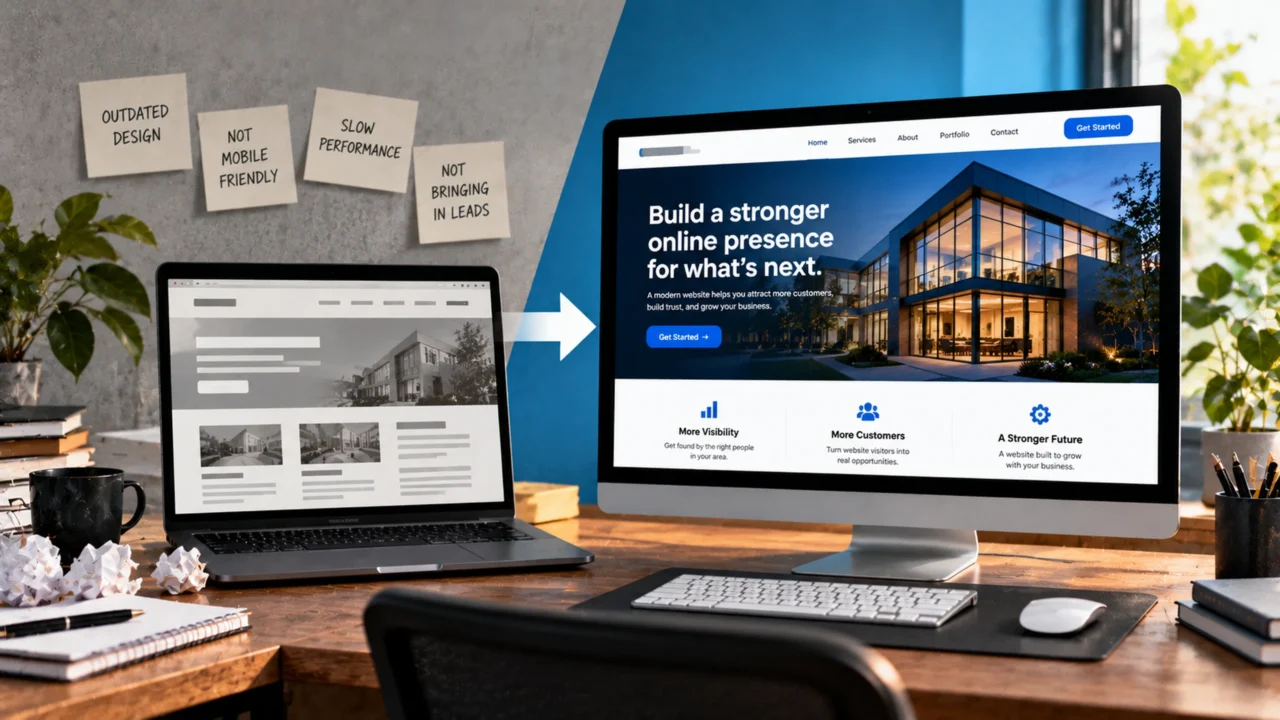
WordPress vs. No-Code Website Builders: Which Is Right for Your Business?
Comparing WordPress to no-code website builders like Webflow, Framer, Wix, and Squarespace? Learn the pros, cons, and which platform is best for long-term business growth.
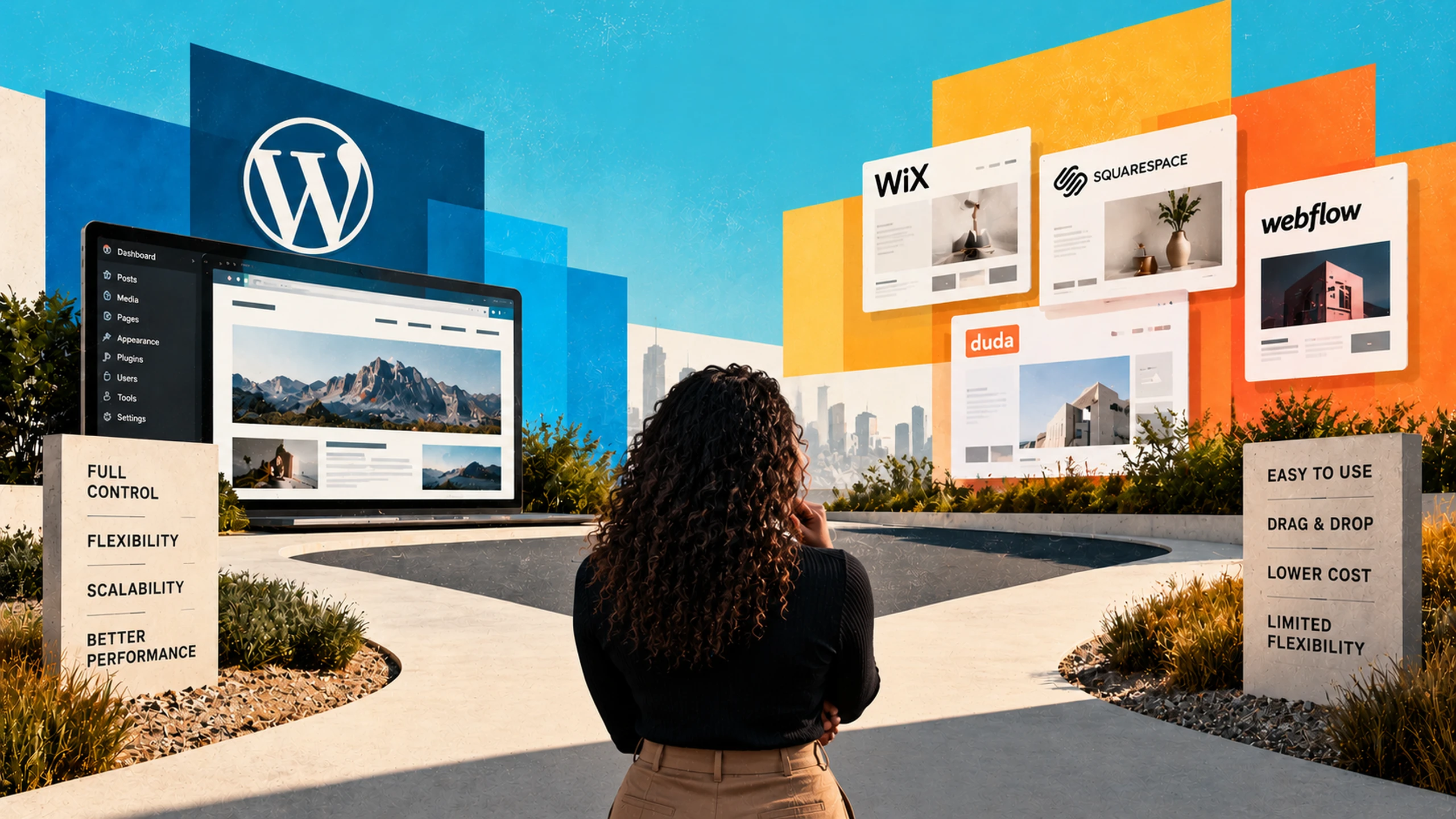
Over the past few years, no-code website builders have become incredibly popular. Platforms like Framer, Webflow, Wix, Squarespace, and others promise beautiful websites without requiring you to write a single line of code.
For many people, that’s an appealing idea. But if you’re building a website for your business—not just a personal portfolio or side project—there’s more to consider than how quickly you can publish a homepage.
The real question isn’t whether no-code builders are good: it’s whether they’re the right long-term solution for your business.
What Is a No-Code Website Builder?
No-code platforms are exactly what they sound like. They allow you to design and publish websites using visual editors instead of traditional coding. Many include hosting, templates, security, and content management in one monthly subscription. Popular options include:
- Framer
- Webflow
- Wix
- Squarespace
These platforms have become much more capable over the last several years, and for certain projects, they’re excellent solutions. In fact, I am familiar with most of them from personal experience.
Where No-Code Platforms Shine
No-code builders are often a great fit when speed and simplicity are the highest priorities. They’re well suited for:
- Personal portfolios
- Landing pages
- Startup MVPs
- Small brochure websites
- Marketing campaigns
- Businesses with very simple needs
Because everything is built into the platform, it’s possible to launch a professional-looking website relatively quickly. For many businesses, that’s exactly what’s needed.
Where WordPress Excels
WordPress takes a different approach. Instead of providing a closed ecosystem, WordPress gives you a flexible foundation that can support almost any type of website imaginable. Whether you’re running a local service business, nonprofit, law firm, healthcare practice, online store, membership website, or growing company, WordPress is designed to evolve alongside your business. That’s one reason it powers more websites than any other content management system in the world.
Flexibility Matters
Businesses change. You might add new services, expand into new cities, hire employees, launch online courses, open an ecommerce store, or integrate new software over the next few years. WordPress is built for that kind of growth.
Need to integrate your CRM? No problem.
Want appointment scheduling? Easy.
Planning to launch an online store with WooCommerce? It’s built for that.
Because WordPress isn’t confined to a single ecosystem, you’re free to build the website your business actually needs instead of trying to fit your business into someone else’s platform.
Ownership Is Worth Considering
One of the biggest advantages of WordPress is ownership. With WordPress, you own your website files, your content, your database, and your hosting environment. You’re free to move your website to another hosting provider or developer whenever you choose.
Many no-code platforms work differently. While you own your content, your website exists within that platform’s ecosystem. If you decide to leave, migrating everything to another platform can be a more involved process. For businesses planning to grow over the next five or ten years, that’s an important consideration.
SEO and Content Marketing
Both WordPress and modern no-code platforms are capable of ranking well in search engines. However, WordPress continues to offer exceptional flexibility for businesses investing in long-term content marketing and Local SEO.
Whether you’re publishing educational resources, building service pages, targeting multiple locations, or creating landing pages for advertising campaigns, WordPress provides the tools and flexibility needed to support an evolving SEO strategy.
What About Maintenance?
This is where many business owners hesitate. WordPress does require ongoing updates and maintenance. Themes, plugins, and WordPress itself need to be kept current to maintain security and performance.
That’s exactly why I operate as a Website-as-a-Service (WaaS) provider. Rather than expecting you to manage software updates, backups, security monitoring, and technical maintenance yourself, I handle those responsibilities for you. You get the flexibility of WordPress without the day-to-day technical burden.
So… Which One Is Better?
The honest answer is that both have their place.
If you’re building a personal portfolio, temporary marketing site, or a simple business website with minimal functionality, a no-code platform may be all you ever need. On the other hand, if you’re building a business that’s expected to grow, evolve, and become one of your company’s most important marketing assets, WordPress is difficult to beat.
Its flexibility, ownership, scalability, and enormous ecosystem make it an outstanding long-term investment for most small businesses.
Choose the Platform That Fits Your Future
It’s easy to choose a platform based on where your business is today. However, the better approach is choosing one that supports where you want your business to be tomorrow.
A website shouldn’t become something you outgrow after a year or two. It should continue supporting your business as your services expand, your customer base grows, and your goals become more ambitious.
That’s why I continue recommending WordPress for most of the businesses I work with. It provides the flexibility, control, and room to grow that business owners often appreciate long after launch day.
Need help with getting your WordPress site online? I’m your guy.
[contact]