What Makes a Good Small Business Website?
Learn the key elements every successful small business website should include, from responsive design and SEO to clear messaging and conversion-focused layouts.
Not all business websites are created equal.
Some websites simply exist because every business “needs a website.” Others actively generate leads, answer customer questions, build credibility, and help businesses grow.
The difference isn’t flashy animations or expensive design trends. The best small business websites are built with one purpose in mind: making it easy for prospective customers to understand what you do, trust your business, and take the next step.
Your Website Should Answer Questions Quickly
When someone lands on your website, they’re looking for answers. Within just a few seconds, visitors should be able to understand:
- What your business does
- Who you serve
- Where you’re located
- How to contact you
- Why they should choose you
If visitors have to hunt for basic information, many won’t stick around long enough to become customers.
Mobile Matters More Than Ever
For many small businesses, most website traffic now comes from smartphones. A website that looks great on a desktop but becomes frustrating to use on a mobile device is costing you opportunities.
Every website should be:
- Responsive on all screen sizes
- Easy to navigate
- Fast-loading
- Simple to read
- Easy to contact with a tap
Your customers shouldn’t have to pinch, zoom, or search for your phone number.
Your Website Should Build Trust
Before someone hires your business, they’re asking themselves one question: Can I trust these people?
Your website should answer that question naturally by showcasing:
- Customer reviews and testimonials
- Professional photography
- Clear descriptions of your services
- Team information
- Frequently asked questions
- Recent projects or case studies
- Easy-to-find contact information
Trust isn’t built with marketing buzzwords. It’s built by showing people who you are and how you can help.
Every Page Should Have a Purpose
One of the biggest mistakes small businesses make is treating every page like an online brochure. Instead, every page should encourage visitors to do something.
That might be:
- Request a quote
- Schedule an appointment
- Call your office
- Purchase a product
- Complete a contact form
- Subscribe to a newsletter
Good websites guide visitors toward action instead of leaving them wondering what to do next.
Search Engines Should Understand Your Website Too
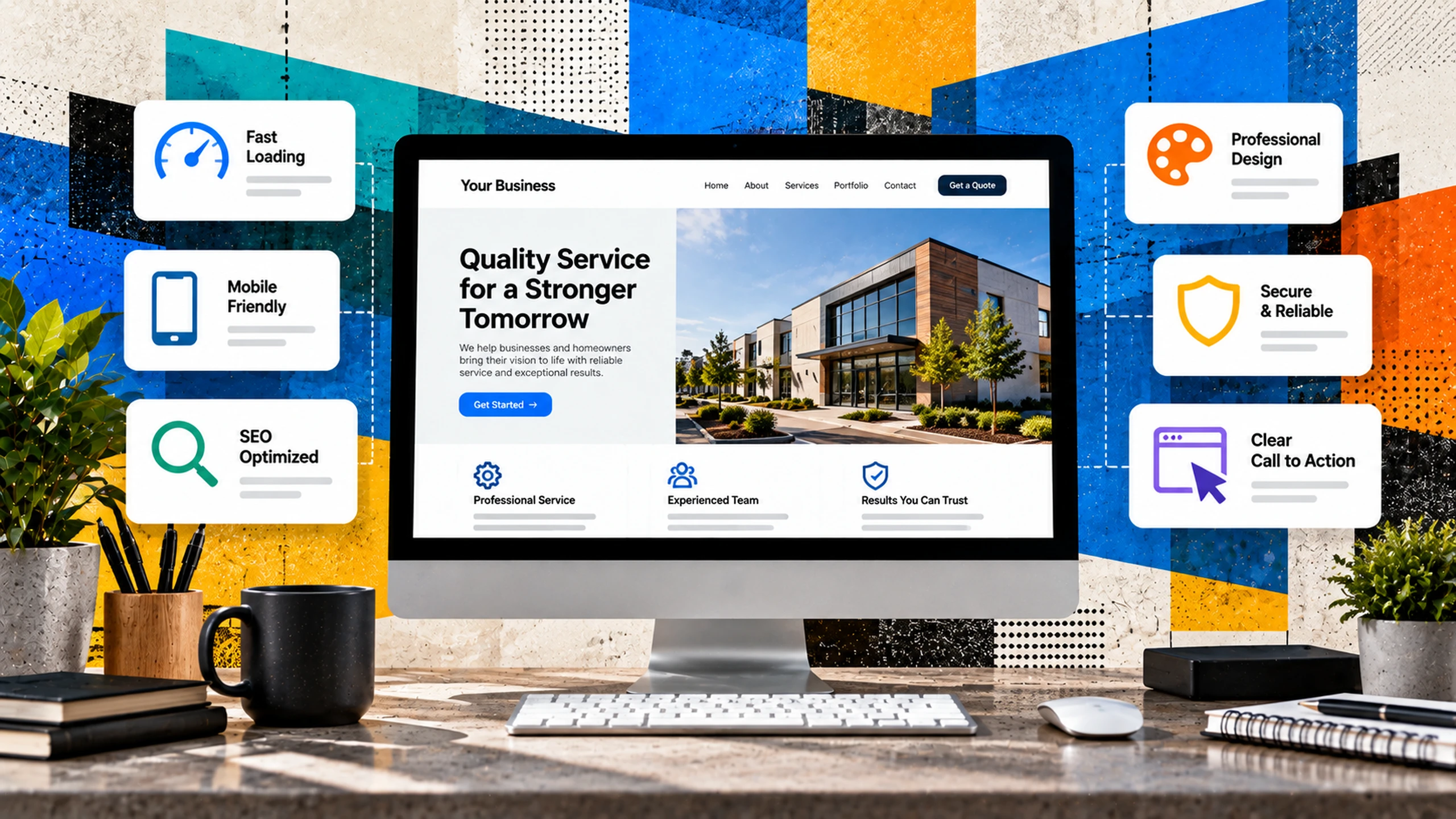
Your website isn’t just for people—it’s also for search engines. A strong small business website should include:
- Logical page organization
- Clear page titles
- Helpful content
- Fast performance
- Mobile-friendly design
- Structured data
- Optimized images
- Local SEO best practices
These technical details help Google better understand your website and improve your chances of appearing in relevant search results.
Speed Is Part of the Customer Experience
Every extra second your website takes to load increases the likelihood that visitors will leave before seeing what you have to offer. Fast websites don’t just improve search rankings—they create better customer experiences. Performance should never, ever be treated as an afterthought.
Your Website Should Grow With Your Business
Businesses evolve. You may add new services, expand into new markets, hire employees, launch products, or open additional locations. A good website makes those changes easy. Rather than requiring a complete redesign every few years, your website should be flexible enough to grow alongside your business.
It’s More Than a Digital Brochure
The best websites become an active part of your business. They can integrate with:
- CRM platforms
- Scheduling software
- Online booking systems
- Payment processors
- Email marketing tools
- Ecommerce platforms
- Live chat
- Analytics and reporting
Your website should simplify your workflow—not create more work.
A Good Website Is Never Really Finished
Your business changes. Technology changes. Customer expectations change. Your website should continue evolving as those changes happen. Regular updates, new content, improved functionality, and ongoing optimization ensure your website remains one of your business’s most valuable assets. That’s one reason I believe in long-term partnerships rather than simply launching a website and walking away.
Build a Website That Works for Your Business
A good website isn’t defined by how many animations it has or how trendy it looks; rather, it is defined by how effectively it helps your business achieve its goals. If your website builds trust, answers questions, attracts qualified visitors, and encourages prospective customers to take action, it’s doing exactly what it was designed to do.
If you’re ready for a website that’s built around your business instead of a generic template, I’d love to help.
[contact]